Indoor vs Outdoor Videotron: Technical Differences and Selection Guide
Many venue owners don't realize that choosing indoor LED panels for an outdoor location — or vice versa — can result in total failure in a matter of months. Learn the key technical differences.
The LED display industry often confuses consumers because visually indoor and outdoor panels look almost identical. However, behind it, there are significant differences in construction, specifications and prices. Choosing the wrong one isn't just a waste of money — it can be a security risk.
Brightness: The Most Fundamental Difference
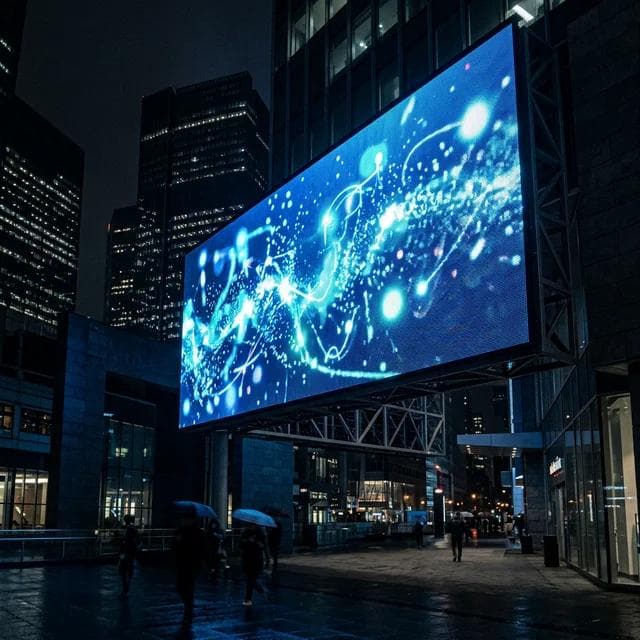
The most basic difference is brightness, measured in nits (cd/m²). Indoor panels generally operate at 800-1500 nits — already very bright for an interior room. Outdoor panels must reach 5000-8000 nits to remain readable when exposed to direct sunlight. Using indoor panels outdoors will result in a display that is almost invisible in bright daylight. The outdoor panel is also equipped with an automatic brightness sensor to adjust brightness based on ambient light conditions.
IP Rating Protection: The Boundary Between On and Off
IP (Ingress Protection) rating determines resistance to dust and water. Indoor panels are typically IP31-IP43 — sufficient for normal indoor conditions. Outdoor panels MUST be at least IP65: completely protected from dust and from water spray from all directions. In areas with heavy rain like Jakarta, IP65 is the absolute minimum — ideally IP67 for panels that are frequently exposed to direct water. Using IP31 panels outdoors isn't just damage to the panels — it's a risk of short circuits and fire.
Pixel Pitch: Tighter Indoor, Sparse Outdoor
Indoor panels are usually available in small pitches: P1.25, P1.5, P2, P2.5, P3, P4. Outdoor panels are less common: P4, P5, P6, P8, P10, P16. This isn't just an aesthetic issue — the sparser pitch in outdoor has a function: larger LEDs are more resistant to external conditions, and thermal management is easier at lower densities. For outdoors with a visibility distance of 8+ meters, P8-P10 is the most cost-effective choice.
Thermal Management and Cooling System
Outdoor panels operate in direct sunlight — cabinet temperatures can reach 60-70°C in the heat of the day. Outdoor panels are designed with active ventilation (fan) or more aggressive passive cooling, plus thermal paste on critical components. Indoor panels that are installed outdoors will experience thermal runaway — overheating which causes premature component failure and widespread dead pixels.
Semi-Outdoor: The Often Mistaken Gray Zone
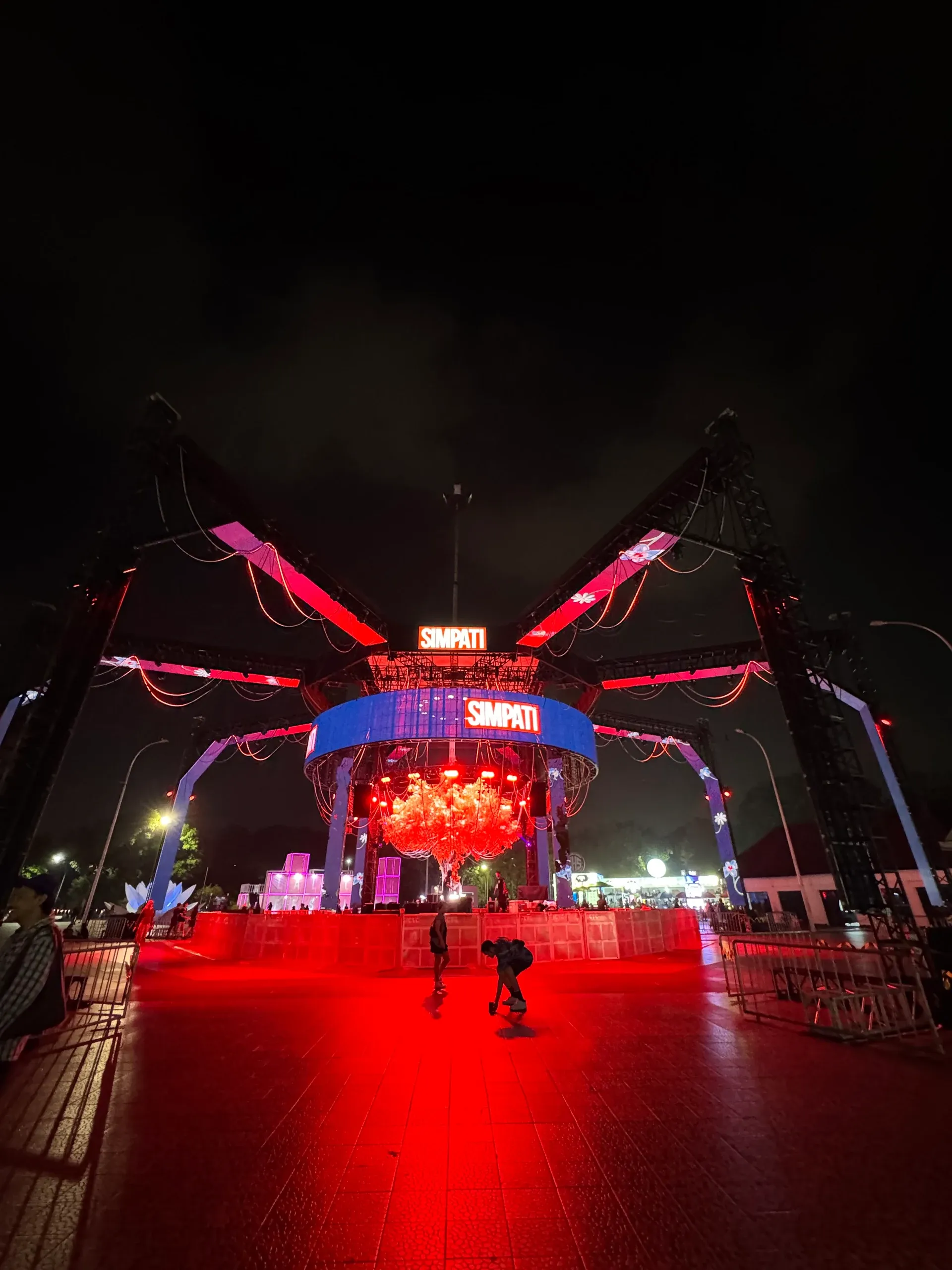
There is a 'semi-outdoor' category for locations that are protected from direct rain but are not in an air-conditioned space — such as under a canopy, in an open atrium, or on a facade facing a direction not exposed to rain. Semi-outdoor panels are usually IP54-IP55 with a brightness of 2500-4000 nits. This is often overlooked and people immediately choose between expensive 'indoor' or 'outdoor' — even though semi-outdoor can be the right solution at a more efficient price.
Selection Guide Based on Location
In an air-conditioned room, not exposed to direct sunlight: P2-P4 indoor panels. Indoor without air conditioning or semi-open area: semi-outdoor panels P4-P6. Under a canopy/pergola protected from rain but exposed to wind: semi-outdoor or outdoor panels P5-P8. Outdoor facade of the building, exposed to direct sunlight and rain: minimum IP65 outdoor panels, P8-P10. Signage on the roadside, public areas: outdoor panels IP65-IP67, P10-P16 depending on visibility.
Linevolt performs a site assessment before recommending a panel type — we never recommend based on price alone. Consult your location and needs with our technical team to get the right specifications.
Need Help?
Consult Your Lighting Project
Our expert team is ready to help from planning to installation. Free, no commitment.