Building Restaurant Identity Through Light: Notes from the Yes Chef SCBD Project
Light isn't just illumination — it's a storytelling tool. A Linevolt working note after the Yes Chef SCBD project: how a restaurant concept was distilled into three lighting layers.
Light as a Storytelling Tool
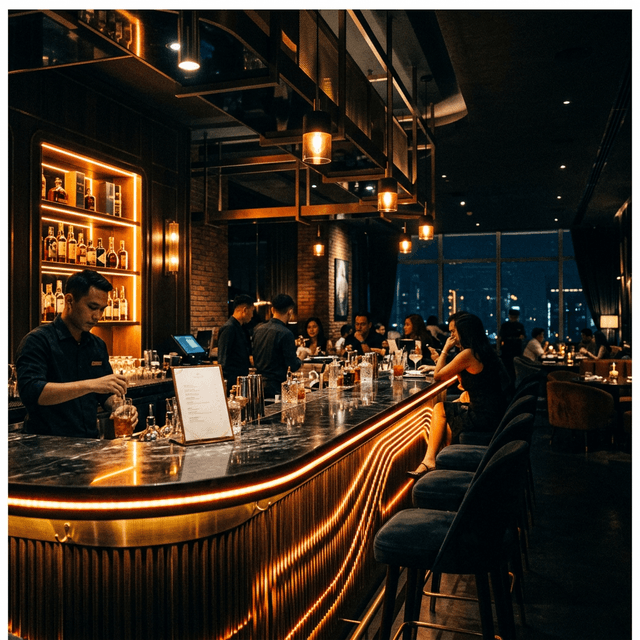
In modern F&B, one thing that's most often skipped during interior design is: how will this room actually feel through a guest's phone camera at 9:30 pm? Not in the daytime renders, not in the launch photos by a professional photographer — through the Sony A7 a content creator brings, and the iPhone an ordinary guest uses.
Light answers this question before the chairs or the wallpaper get a chance. That's why for Yes Chef SCBD we didn't start from an interior moodboard — we started from a single brand sentence: contemporary, confident, slightly edgy.
Why Premium Restaurants Invest in Light
Three structural reasons we usually walk F&B owners through during the proposal:
First, content equity. Guest photos and videos are the cheapest organic PR a venue can buy. Restaurants that look great at night get 3-4× the engagement of those that don't. It doesn't happen because of the food — it happens because the atmosphere can be uploaded without a filter.
Second, dwell time. Guests who feel comfortable in a room stay longer. Longer means dessert, after-meal coffee, and a return visit. The right light extends this loop without saying a word.
Third, brand consistency. Light is the only interior element that can change by design — by hour, by event, by season. A restaurant without lighting control can only be consistent in daylight. The rest depends on whatever happens to be plugged in.
The Three Layers at Yes Chef
We use the same 3-layer framing (task, ambient, accent) for almost every premium restaurant, but the proportions vary. At Yes Chef, the split was about 25/45/30.
Layer 1 — Task Lighting (25%)
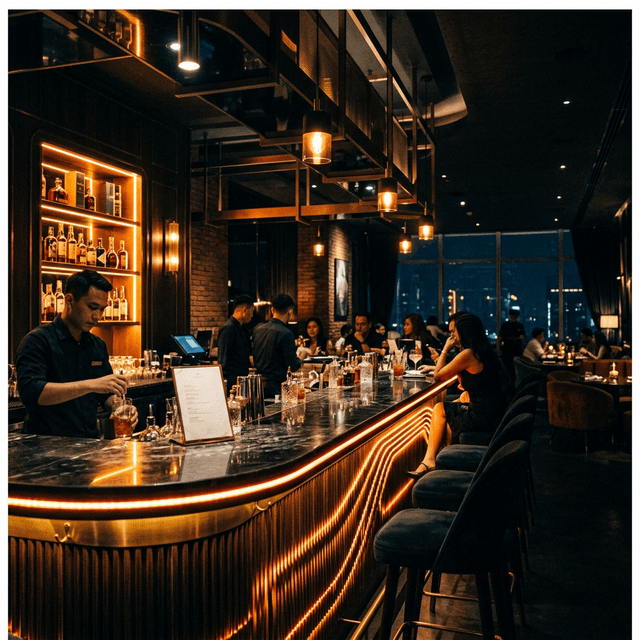
This is the functional light. The open kitchen, bar counter, and host stand need high CRI (Color Rendering Index) — we used CRI 95+ LED strip so food reads accurately on the plate. Greens stay green, meat stays fresh-red. Low-CRI strip turns steak grey on a guest's camera.
Layer 2 — Ambient Lighting (45%)
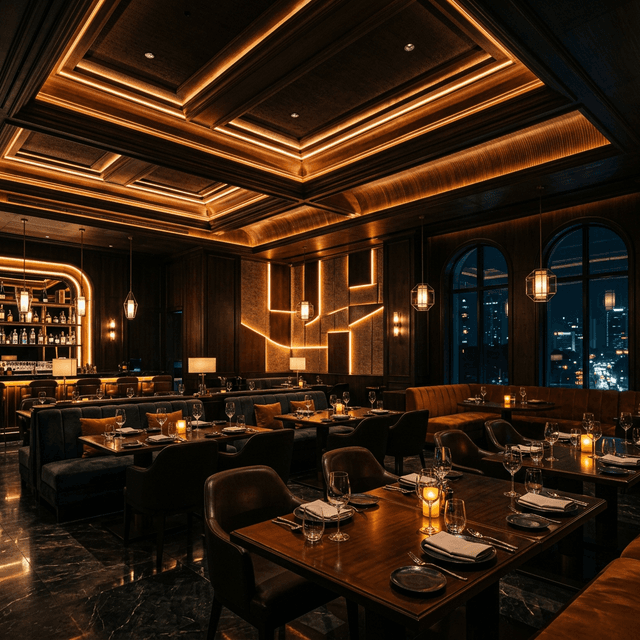
This is the heart of the mood. At Yes Chef we ran addressable LED behind acoustic panels and ceiling beams so the entire space could shift color temperature across the day:
- Lunch (12:00-15:00): 4000K, 85% brightness — energetic and bright
- Dinner (18:00-21:00): 2700K, 70% brightness — warm and intimate
- Late night (after 21:30): 3000K with subtle amber accent — moody
The transitions happen automatically through scene presets in the controller. Guests don't notice it directly, but they notice that the restaurant feels different from one visit to the next.
Layer 3 — Accent & Feature (30%)
This is the deliberately designed "Instagram moment". Spotlights on artwork, glow on tall planters, and a signature wall near the washbasin — places where guests already pull out their phone. The light here is intentionally directional, not flood — the subject is clean, with a slightly darker background.
A Technical Challenge: A Ceiling You Can't Drill
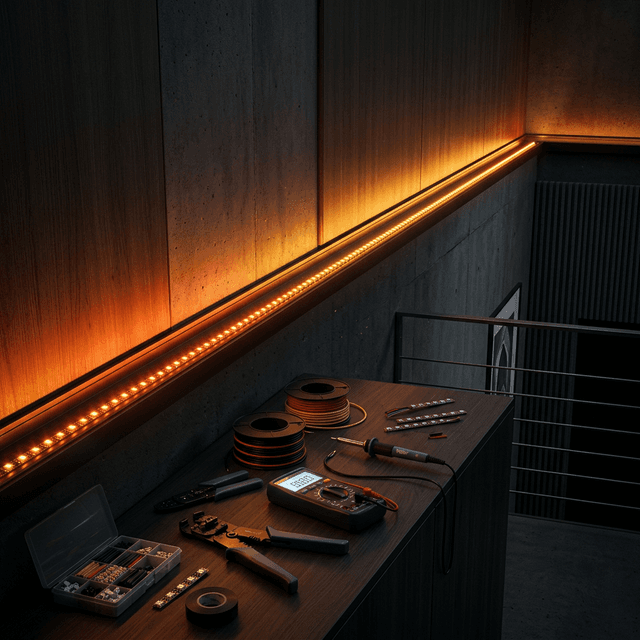
The Yes Chef ceiling is exposed concrete — part of the industrial-modern aesthetic the owner picked. That means we couldn't make new holes, couldn't hide cable runs above ceiling tiles, and had to design routes that read as elegant in plain sight.
What we used:
- Cove channel behind acoustic panels — aluminium channels mounted to the structure, LED strip inside, the acoustic panel doing double duty as both sound treatment and a soft diffuser
- Exposed black-finished cable tray — not hidden, deliberately featured as part of the industrial aesthetic
- Dual-data-line WS2815 — IC with redundant data lanes, so a failed pin still leaves the strip working until scheduled maintenance
Control: Running Without an On-Site Tech
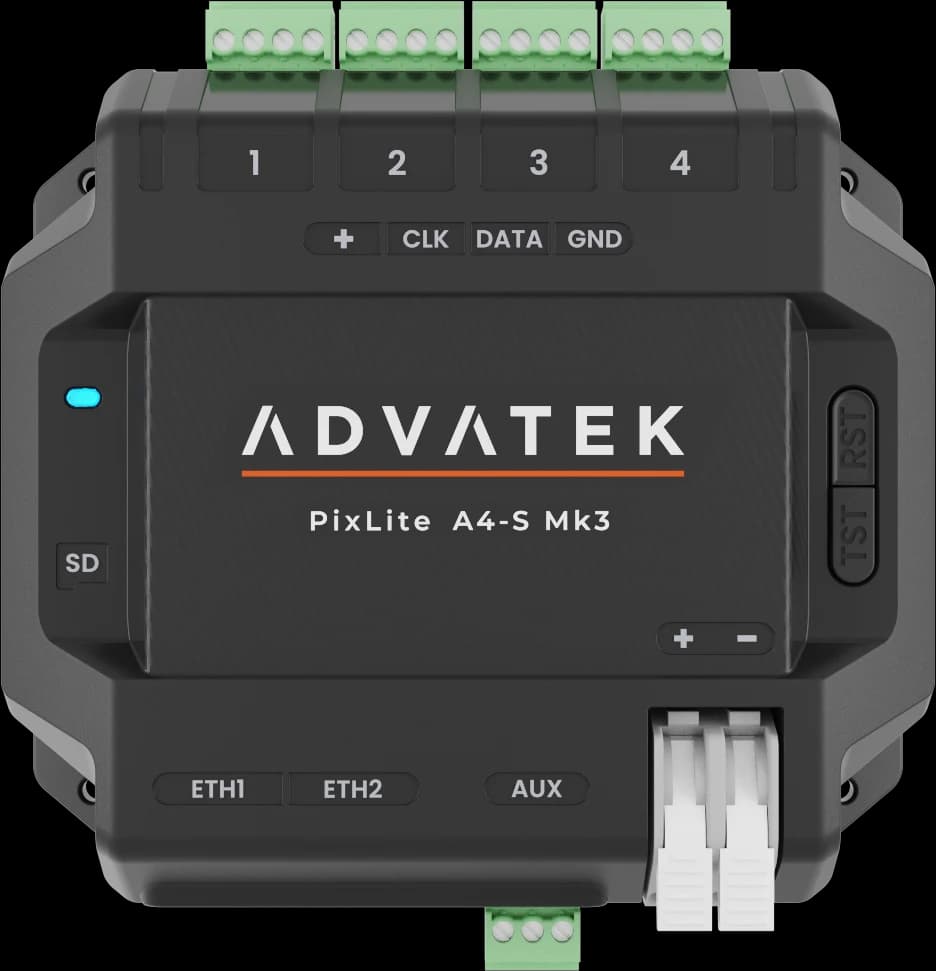
The critical part most projects skip: after we leave, who runs the lighting? At Yes Chef, the answer is the host stand. A reception tablet has 8 scene presets — "High Noon", "Golden Hour", "After Dark", "Birthday Mode", "Anniversary", "Slow Sunday", and two event scenes the manager can edit.
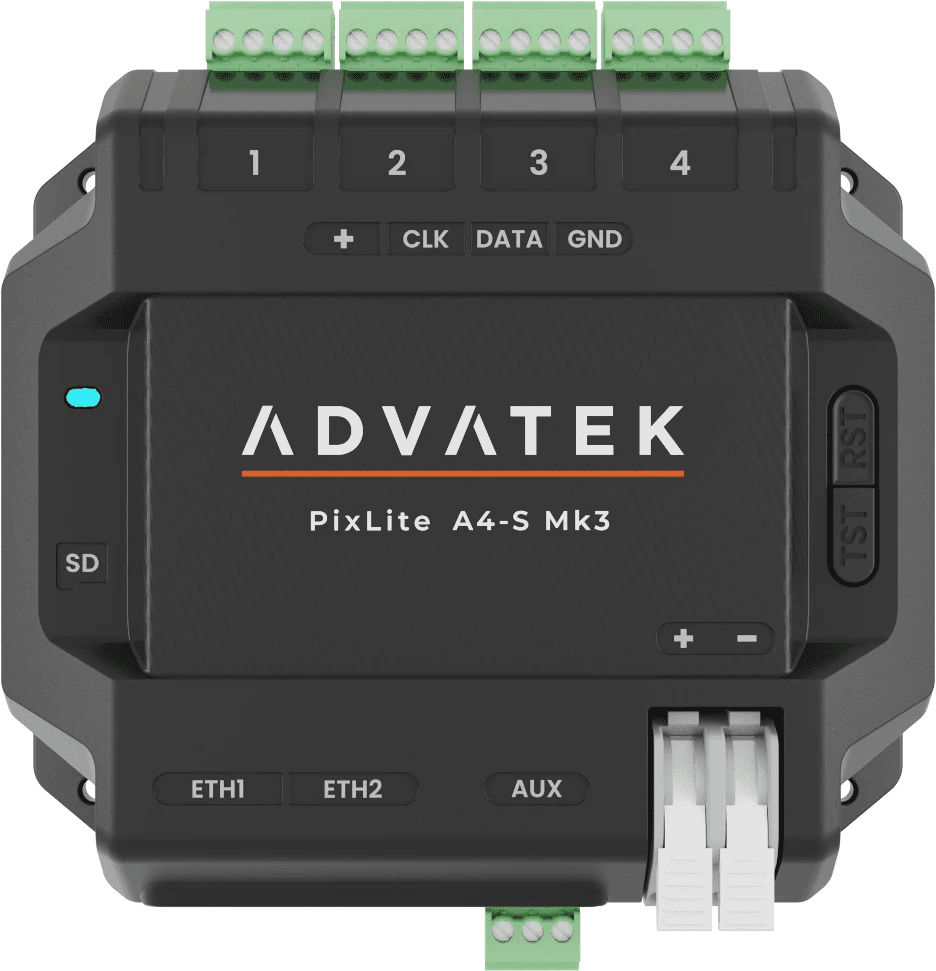
The controller: Advatek PixLite Mk3 — one unit for the whole restaurant, with 24+ universes of DMX/sACN. Reliability is a hard requirement: a restaurant doesn't have the luxury of shutting down because the lights are broken.
What Doesn't Show: Quality Control
Most of the value a lighting specialist brings doesn't show up in the photo. It shows up two years later, when the strip is still working as if it were day one:
- Power injection every 5 meters — color stays stable across the run, and ICs don't overheat
- UV-resistant aluminium profile — diffusers don't yellow near windows
- Dual-feed power — power enters from both sides, not one, eliminating mid-run voltage drop
- Authorized controller with firmware updates — Advatek ships firmware that fixes edge cases; cloned OEMs don't
These small choices explain why two restaurants that "look the same" age very differently — one still looks great in year 3, the other needs panel replacements in year 1.
Lessons for F&B Owners
Three practical recommendations from this process:
1. Start from mood, not from product. Pin down "what should my guest feel" first — then choose the strip, fixture, and controller. Reverse the order and you often end up with premium product in the wrong place.
2. Plan the control with the operator. Show the tablet UI to the venue manager while it's still a prototype. If it confuses them, the programmer needs to redesign. Bad UI is a long-term operational cost.
3. Test at night with a phone camera. That's the worst case you have to handle. If the phone shot looks good, a professional camera shot will look great.
Wrap-up
The Yes Chef project wasn't about "more colors" — it was about hiding as many lights as possible until the guest sees only the atmosphere. That's the work we do.
Need Help?
Consult Your Lighting Project
Our expert team is ready to help from planning to installation. Free, no commitment.