The Anatomy of a Premium Bar: What Actually Makes a Space Feel 'Alive'
Good bar lighting isn't about how many colors you can play — it's about how cleverly you guide a guest's eyes. A perspective from Linevolt after the H Bar SCBD project.
A Bar Is Not a Restaurant
A successful bar has one simple visual job: guide the guest's eyes to the right place — the bottles, the bartender, the other guests, or themselves in the mirror. That job is done by light, not by furniture. It's the first thing we usually tell venue owners when we meet them in SCBD.
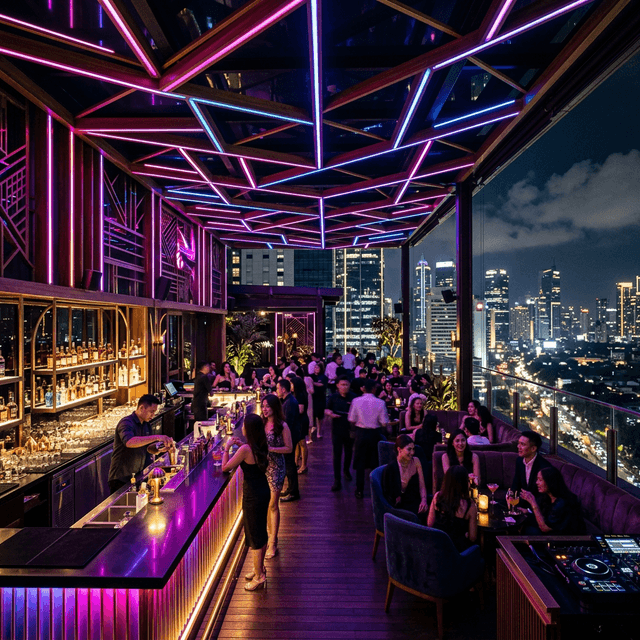
For the H Bar SCBD project, the main brief was: "I want the bottles behind my bar to be featured like jewelry display — not warehouse shelving." Simple sentence, but it shaped almost every technical decision that followed.
The Four Layers That Make a Bar Feel Alive
We break every bar lighting design into four layers. Not every bar needs all of them, but understanding the structure helps owners make decisions without falling into the "more colors, more better" trap.
1. Counter Glow — Identity From a Distance
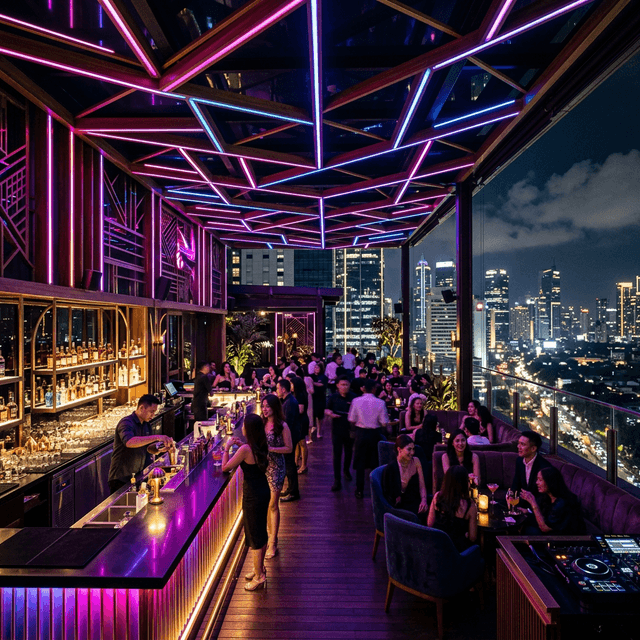
This is the under-bar light you see all over Instagram with #moodybar. Its job is not to light the guests — it's to make the bar's outline read iconic from across a crowded room. The technical key: addressable LED strip with a milky diffuser to prevent hot spots, plus tight power injection so the color stays even from end to end.
2. Back-Bar Pixel — The Bottle Display
This is the visual heart. Each shelf ideally gets its own light so premium products can be featured individually. Addressable LED strip with SK6812 or WS2812B ICs lets us pixel-map per shelf column — program a slow animation that highlights one bottle every few seconds, and the eye follows automatically.
3. Counter Edge — Anti-Glare
This layer is often forgotten, even though guests see it the most when seated. LED on the counter edge inside an aluminium profile with opal diffuser eliminates hot spots and casts soft light onto the guest's hands — enough to read a menu, not enough to glare.
4. Ambient Ceiling — Mood
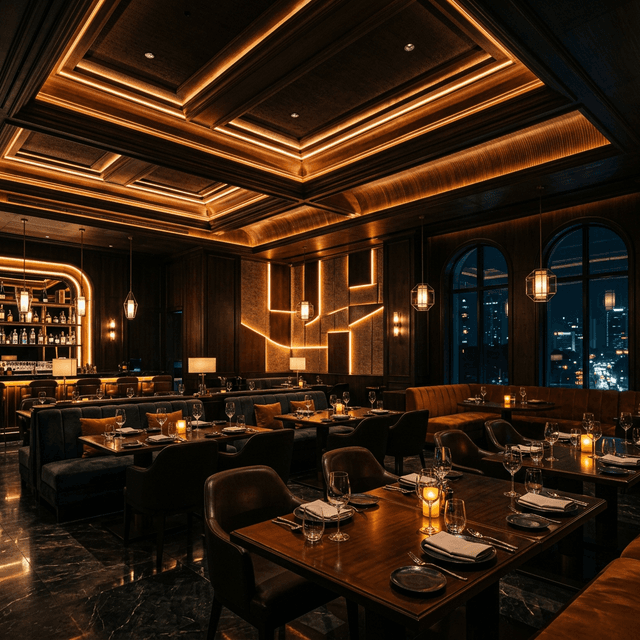
This is the room-level light. In a premium bar we rarely use standard downlights. A cove with warm-temperature LED (around 2700-3000K) gives mood without sharp edges. Guests don't "see" lights — they just feel that the room is comfortable.
Control: Where Many Projects Fail
This is the part that's often skipped at design phase: who will trigger the scene every night? If the answer is "the venue manager", then the system has to be operable by a non-technical person.
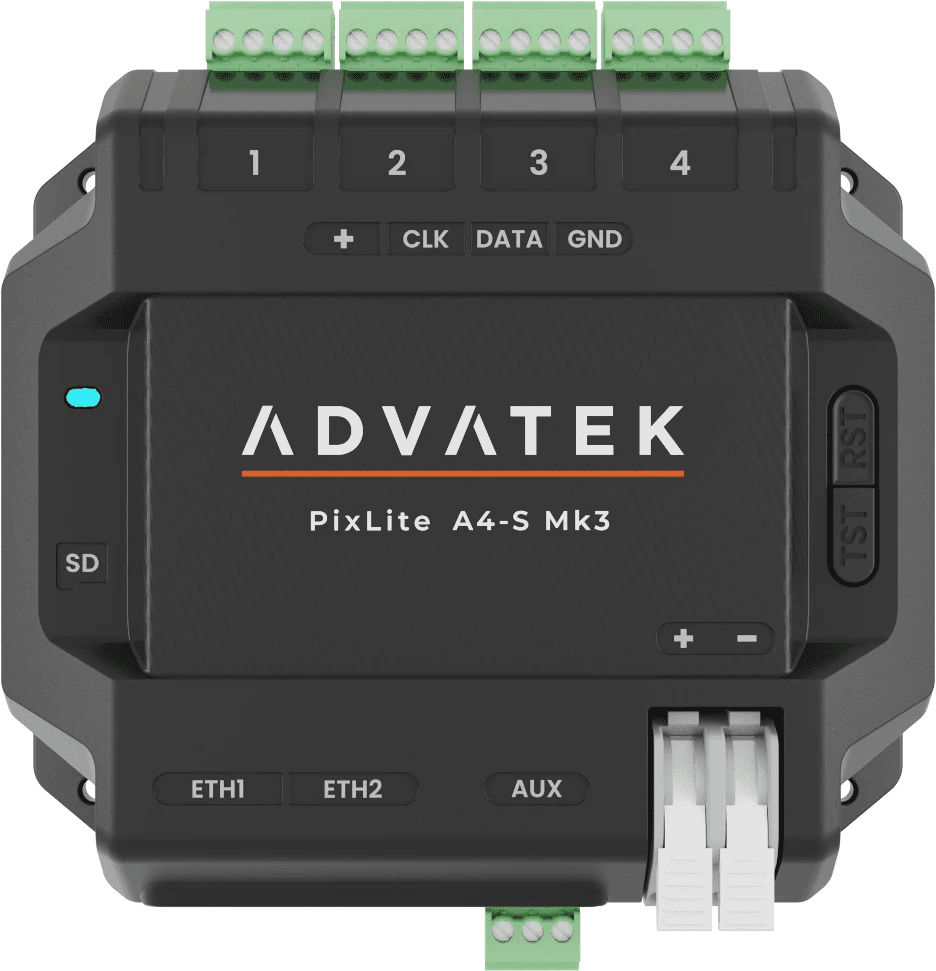
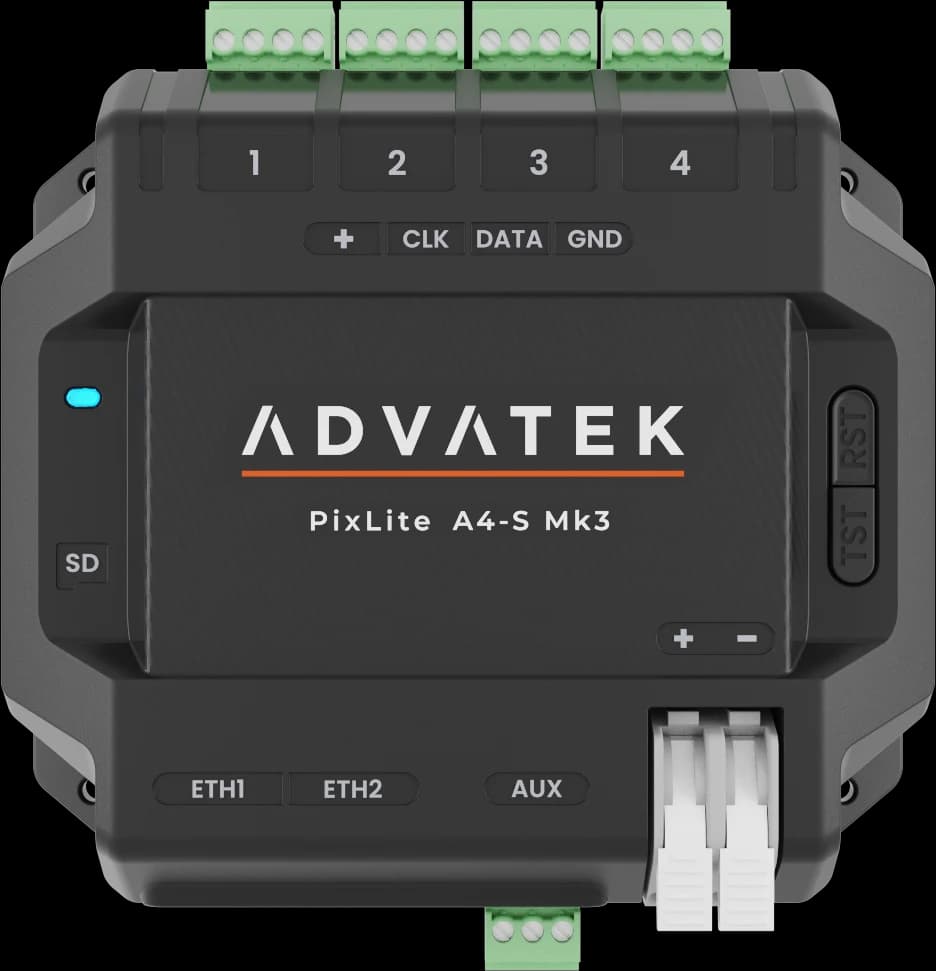
At H Bar, we picked the Advatek PixLite A4-S Mk3 — 24 universes, plenty for the back-bar and counter-glow rig, with one data cable and one power cable. More important: Advatek's free software (PixelPatroller) let us build a preset library — the manager simply taps "Friday Night", "Date Night" or "Live DJ" from a tablet, no programmer's laptop required.
This quietly changes the economics of running the venue: no more calls to the technician for every special event.
Common Mistakes We See
From the audits we've done across Jakarta, here are the three most common patterns we see when bars are wired by non-specialists:
Pattern 1 — Cheap strip, sketchy IC. Strip with cloned ICs (claiming WS2812B but actually a local chip) often have inconsistent refresh rates. On a guest's phone camera, it shows up as black bands or color flicker — a social-media feed ruined by strip that was 30% cheaper.
Pattern 2 — Undersized power supply. Each meter of 5V/12V strip pulls real amps. Power supplies are picked from the peak spec, not the average, and power injection is skipped. Result: colors collapse to red-brown at the end of the run.
Pattern 3 — No plan for dimming. The same bar runs from early evening (warm, low brightness) to late night (sharper, high brightness). Without a controller that dims smoothly, the only option is on/off — and a 10pm guest sees a room that looks identical to a 6pm guest.
What Makes H Bar Different
What makes H Bar feel different in SCBD, according to the owner, isn't one big element. It's five small decisions held consistently:
- Every strip has a diffuser — no "naked" pixels anywhere
- Power injection every 5 meters — color stable left to right
- The preset library was built with the bartenders, not just by programmers
- The color palette is restricted (not the whole spectrum) — guests' eyes don't fatigue
- Operations are done by the manager, not a tech
All of this sits on top of picking the right strip. On top of picking the right controller. But it's the layer that's most often skipped when a project gets carved up by a generalist contractor.
Wrap-up
If you're planning a bar — a rebrand of an existing space or building from zero — the most useful question to answer early is: "Where should my guest's eye land, and when?" Once that's clear, every lighting decision after that becomes a lot simpler.
Need Help?
Consult Your Lighting Project
Our expert team is ready to help from planning to installation. Free, no commitment.